

When I was in junior high (middle school in these parts), in addition to typing class (on TYPEWRITERS), all 7th graders were required to take a “life skills” class. I don’t recall everything involved in this class, but there was a multi-week health section (where, apparently ahead of her time, the teacher talked about hormones being given to cows and I promptly stopped drinking milk) and a multi-week cooking section. “Cooking” might be a very loose term here as we made things like sandwiches.
Let me back up here for a second: My family was far from wealthy. Pride is perhaps stopping me from saying we were monetarily “poor,” but I remember sitting at the WIC office when my sister – 10 years my junior – was a baby. We always have everything we needed and it was only later in life I realized what WIC meant.
Anyhoo, one day in cooking class we were going to make something so amazing that a girl in my cohort was providing some type of canned vegetable. (YUM!) She forgot the vegetable and had to call her dad to run it over. When he arrived, I was shocked to see he wasn’t carrying the name brand Del Monte, like we always had at my house, but a store brand. (Shudder.)
This stood out to me so much that I brought it up to my mom after school. “Mom, why would this girl bring store-brand vegetables to school when I know they can afford Del Monte?”
One of the best pieces of wisdom my mom ever gave me was this: The way wealthy people stay wealthy is by purchasing things like store-brand products because they know it’s the same product, it just costs less.
This didn’t really make sense to me at the time because of the one question that kept popping up in my young brain: Why are we spending more on name brand products if we, too, can save money by purchasing the exact same thing in uglier packaging?
25 or so years later and I still face similar issues on a near-daily basis. While I’m no longer thinking about canned vegetables, “name brand” business products are occasionally the bane of my existence. (Writing about junior high has me feeling a bit melodramatic.)
For instance, when someone who already has a WordPress-based website approaches me about a redesign, the first question I’ll ask is who they’re using for hosting. 9 times out of 10 it’s either GoDaddy or BlueHost, two of the hosting companies with the biggest name recognition but also two of the worst hosting companies.
When email marketing comes up, everyone knows Mailchimp because they have a “free” plan, but there are so many lesser-known companies that are easier to use, come with more bells and whistles, and offer more robust free plans.
Finally, I am Google’s #1 fan. But small businesses paying for Google Workspace (FKA G Suite) can be puzzling, too.
Before you go out and purchase the Del Monte of business tools, let me tell you why you’ll probably find more bang for your buck in some of their lesser-known competitors.
Run Away from Hosting Companies like BlueHost and GoDaddy

One of the most popular things I’ve ever written on the internet is a little post about how BlueHost Sucks. I haven’t written something similar about GoDaddy, but I should add it to my list.
Chances are if you’ve signed up with one of these companies it’s because they have the type of brand recognition we’d all kill to have. They’ve been around forever.
GoDaddy has commercials, Danica Patrick drove the bright green GoDaddy car in NASCAR races, and I repeat: In terms of the internet, they’re ancient.
You probably know BlueHost because so many online entrepreneurs promote the company. (Just Google Neil Patel and Bluehost… there are approximately 70 billion hits.) What those personalities don’t tell you is that they’re making BIG bucks to promote BlueHost, just like Danica did with her race car.
I’m not here to tell you name recognition for business tools is a bad thing because it’s certainly not. But in the case of these two companies, huge brand recognition combined with ongoing advertising means that they can offer subpar services because, well, can you name another web host?

Neither company offers particularly good customer support. Both companies will upcharge you for basic things, like backups or restoring your site if something goes wrong. Both offer introductory plans that will skyrocket in price once your initial term is up.
The thing that’s currently driving me particularly nuts about GoDaddy? They charge for SSL certificates, which is what puts the little lock next to your URL in the menu bar. Without that lock, your website is considered unsafe. Pardon my language, but in this day and age, charging for an SSL certificate for a basic website is a dick move.
This is one of my favorite topics. I could go on forever but I’ll cut myself off. For now.
What’s the best alternative to GoDaddy? What’s the best alternative to BlueHost?
I’ve tried a lot of web hosting companies in my day, including GoDaddy and BlueHost. At this point, there are just two I recommend.
Lyrical Host
Lyrical Host is a small hosting company based in the UK. The owners, Jenni and Andrew, are available to talk to if you need them. In fact, if your website needs any support, just file a ticket and Andrew typically responds within MINUTES. SSL certificates are free. Their prices are fair and stay the same from year-to-year. There’s no crazy introductory deal but there’s price stability: You won’t pay $30 the first year and $450 every year thereafter. They automatically run daily backups, their uptime is wonderful, and have I mentioned they have the best customer service ever?
Lyrical is where I host all of my sites – including this one!
GreenGeeks
GreenGeeks doesn’t give you the personalized service that Lyrical Host does, but they’re still pretty awesome. Based in the US, they’re eco-friendly, provide free SSL certificates and nightly backups, great uptime, and provide fabulous chat support. Unlike Lyrical, GreenGeeks does offer an introductory plan of approximately $106 for the first three years, but after which your price will increase quite a bit.
I give my whole-hearted approval to either of these hosting companies.
Don’t Get Caught Hanging with MailChimp
I started my online journey back in 2009 and did what EVERYONE was doing at the time: I set up an account with MailChimp. (#internetpressure … it’s the new #peerpressure) But honestly, I used them for years and it was fine. Not great. Just fine.
In the name of “trying everything possible,” I moved away from MailChimp about six years ago when I discovered another free email provider, Mad Mimi. (They are no longer free.) Since then, I’ve bounced around quite a bit and realized MailChimp is doing a great job of holding a banana over everyone’s eyes.
There are currently three reasons I don’t recommend MailChimp to people.
- It’s hard to use! While most email marketing companies have switched to automation (and offer it for free!), MailChimp still makes you do almost everything manually.
- Their “support” is basically nonexistent and their documents can be hard to follow. With nobody there to help you, you’re probably going to spend a lot of time googling things like “how do I connect Woocommerce to Mailchimp,” because someone on the internet will have better instructions than MailChimp offers.
- Their free plan is monkey poop. If you take a quick glance, you’ll see “up to 2,000 contacts” are included on their free plan. What they don’t make clear is that this includes anyone who has ever signed up for your list and then unsubscribed. Since it’s not uncommon for people to subscribe and unsubscribe, you’re going to be paying MailChimp sooner than you think… even though your list may be well short of 2,000 recipients.
Now, let me be clear: I am not opposed to paying an email marketing company! Companies that create business tools need to make money and I fully support that. What I don’t like is having a “free” plan with hidden stipulations. Or a free plan that’s, frankly, total crap.
What’s the best alternative to MailChimp?
Anyone.

Honestly, anyone.
I’m tempted to leave that as my answer because >>it’s true<< but here’s the main MailChimp alternative I use and recommend:
Mailerlite
If you ask me, MailerLite suffers because they gave themselves a less-than-stellar name however many years ago. I mention “MailerLite,” and people immediately want to go back to monkey mail because they just don’t like the name. (Maybe it’s the “lite”? Nobody wants lite mail!)
But here’s the thing: MailerLite is one of the BEST email marketing companies out there. Their free plan is good until you have 1,000 active subscribers and you can send up to 12,000 emails per month. If you’re good with 1,000 subscribers but need to send unlimited emails then you can upgrade for just $10/month.
Even their free plan comes with automations that will make your life so much easier. For instance, if someone signs up for your email list because they’re interested in volunteering, they can automatically be tagged “volunteer,” which will make it easy for you later if you want to send communications to only those people who have been tagged as volunteers.
But let’s take it a step further. Let’s say you have a sequence set up so that everyone tagged as a “volunteer” gets sent a sequence of emails.
Hold on to your hats because this is about to get exciting.
You probably don’t want your new volunteer getting inundated with emails as soon as they register, so you can start them off by only receiving the introductory volunteer sequence. Then, once that ends, they can automatically get shifted to your main email list! They’ll still retain the volunteer tag so you can easily contact all volunteers in the future but they’ll also get the “normal” emails you send out to your mailing list!
Whew. I hope you’re as excited as I am about all that automation!

You’re Going After GOOGLE?!
Maybe you’ve been with me up until this point but Google?! I mean, most of their business tools are free. Why fault them for charging for one service?!
Here’s the thing: Depending on your web hosting company, you can already get branded email addresses for *free.* Why pay Google for something you can get for free?
Of course, Google doesn’t want you to know this so they advertise branded business emails for the low price of $6 per month for the basic plan. And I admit that sounds like a good deal!
But again, good* web hosting companies give you free email accounts.
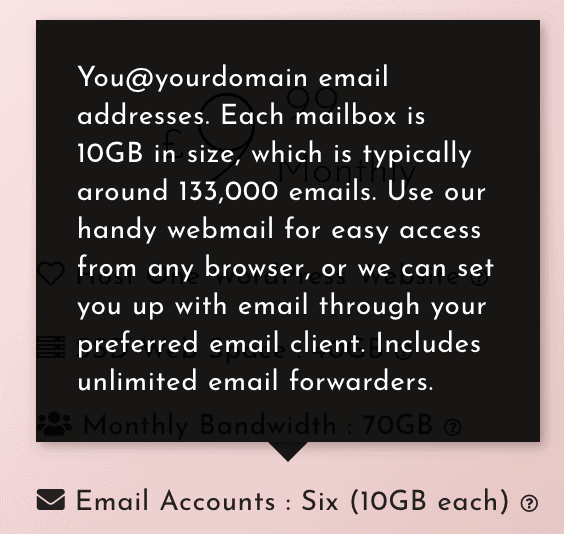
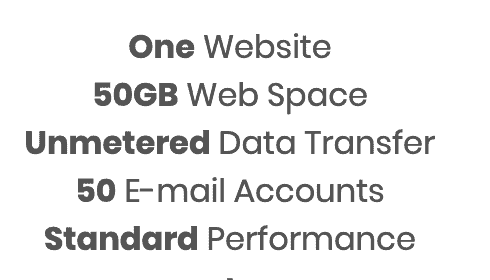
*Nope, neither GoDaddy or BlueHost offer free email with their basic plans.
When you’re looking at web hosting companies, making sure they include email in the price can save you big bucks over the years.
Here’s the honest truth: My time working online predates G Suite or Google Workspace or whatever they’ll call it tomorrow. I have never once paid for branded email nor do I ever plan to pay for it. It took me a while to figure out that many people don’t have a clue their email addresses can be free.
Caveat: I’m writing this primarily for small business owners with no more than a handful of employees. With more employees you may well find that collaborative tools like integrated Google Drives and Calendars, as well as recorded meetings, are well worth the price of admission.
You don’t know what you don’t know
Here’s the rub: You don’t know what you don’t know until you know. So how are you supposed to know that the brands everyone talks about aren’t necessarily the best brands?
Ask a web designer!
I have yet to meet a web designer without a mountain of business tools, products, and companies they’ll happily recommend.
Above are some of the companies I recommend without hesitation and other web designers will have their own. We all think we know what’s best for our clients. But, while we might not agree on the best business tools, chances are we will mostly be in agreement about the companies to avoid.
If you don’t have a web designing friend (ahem), find someone you trust who’s willing to tell you the truth. 9.5 times out of 10 if you find an article on the internet called “the 20 best web hosting companies in 2021,” they’ve chosen whoever appears in the list because they’re receiving money to put them there, be it via direct payment or affiliate commissions.

Yes, I live my life on the internet and I’ve now typed up a 2,000+ word diatribe comparing business tools to overpriced canned vegetables, but I’m going to tell you this with a straight face: Don’t believe what you read on the internet.
Give those store-brand canned vegetables business tools a second look
Ultimately, Del Monte canned vegetables are great. The Del Monte business tools are, begrudgingly, just fine. My mom told me wealthy people stay wealthy by purchasing store-brand canned vegetables. I wish I could tell you using lesser-known business tools would make you wealthy, but I’m pretty certain that has more to do with your work ethic and work quality. What I can tell you is that while the packaging won’t be as shiny, store-brand canned vegetables lesser-known business tools are at least as good, if not better, than Del Monte the business tools with incredible brand recognition. Like any small business, smaller companies need to offer more to prove themselves since they don’t have the option of taking a break because everybody already knows them.
Check out my Resource Library for other business tools I recommend.

- Why the Best Business Tools are Like Store-Brand Canned Vegetables - March 16, 2021
- MemberVault Review: The Best Course Membership Platform - January 24, 2021
- 8 Must-Have Elements All Websites Need to be Successful - November 22, 2020